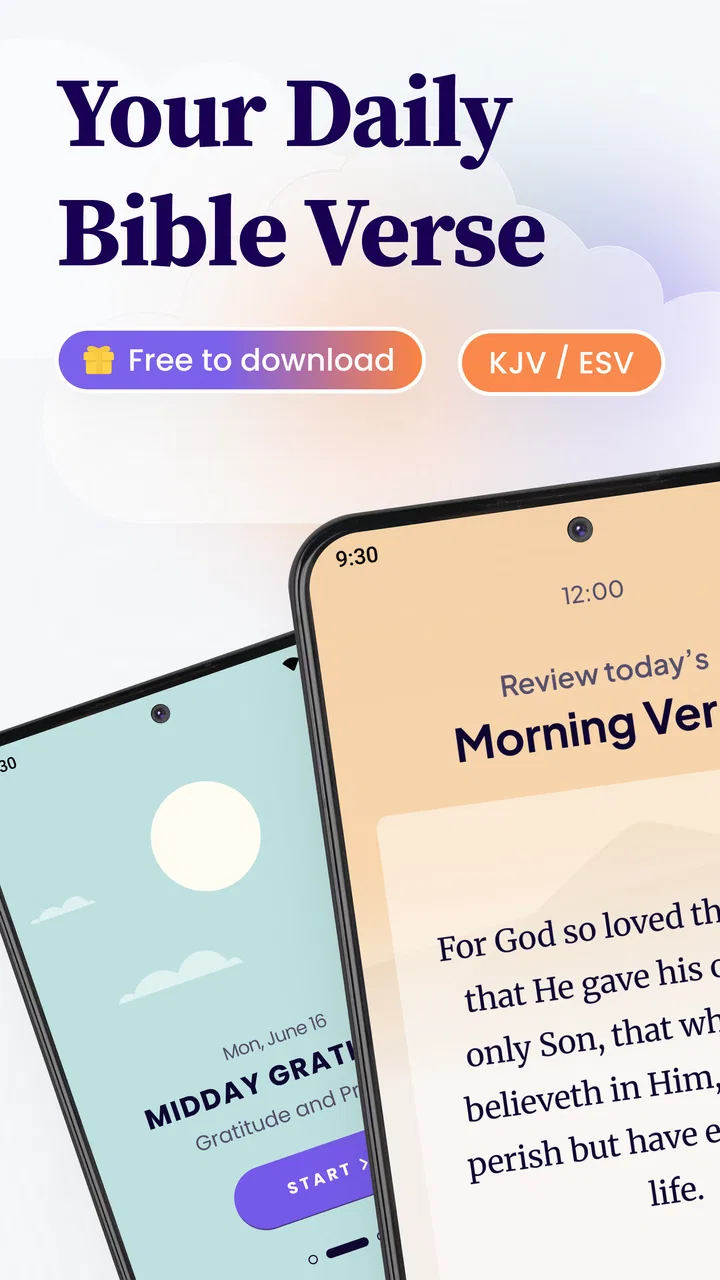
Simple Bible Daily Verse Alarm
- 4.8
- Rating
- 1.00M
- Installs
- Free
- Price

 Analysis by App-foxy
I approached Simple Bible Daily Verse Alarm as a small daily-reading tool rather than a full Bible replacement, and that distinction matters. Its focus is narrow: it brings a Bible verse, prayer, scripture, or quote into a person’s routine, with an alarm to help make that routine consistent. I like that purpose because it avoids the clutter found in many larger religious apps. At the same time, a focused design only works when the basic reading and reminder experience feels comfortable for different people and different situations.
This is a free education app from Reminders & Alarms, available for Everyone and running on Android 9 or later. It has reached over a million installs, with a 4.8 average from around 49 thousand ratings, so it clearly appeals to a broad audience. My experience with it is best described as calm and practical: it is useful when I want a short moment of reflection, but it is not the right tool when I need extensive study material, detailed note-taking, or a complete replacement for a printed or digital Bible.
How the reading experience works for different people
I find that the reading experience depends less on how much time someone has than on what they need from a daily prompt: a quick pause, a quieter screen-based ritual, or a starting point for further study. A practical approach is to let the verse fit the person’s day rather than forcing every reader into the same morning routine. The next section looks at how those different expectations shape the choice between a brief devotional and a fuller reading tool.
You May Also Like

 Blood Strike: 2.5 Anniversary
Blood Strike’s Loadouts Turn Every Drop Into a Tactical Gamble
A close look at Blood Strike’s custom loadouts: how fast access to signature weapons reshapes its battle royale rhythm, rewards preparation, and narrows the gap between fights.

 Pandora - Music & Podcasts
Pandora’s Music Is Easy to Start, but Harder to Recover
Pandora’s strength is its low-effort path from a seed to a station. Its weak spot is how much confidence it asks you to place in connection, setup, and quiet recovery.

 8 Ball Pool
 Is Built on Rivalries, Rematches, and Routine
A close look at the rivalries, rematches, shared routines, and unanswered safety questions that turn a quick pool match into a persistent mobile community.

 Samsung Music
’s Quiet Strength Is Playing What You Already Own
Its reach comes less from spectacle than from dependable access to a personal library. That simplicity is both the app’s strongest retention engine and its ceiling.

 AccuWeather: Weather Radar
AccuWeather Review: A Quick, Clear Forecast for Everyday Decisions
For everyday plans, the best forecast is the one you can understand quickly. AccuWeather makes rain timing, radar, and local conditions easy to act on, with a few trade-offs.

 Hill Climb Racing
Why Hill Climb Racing Still Turns Crashes Into One More Run
A tiny car, a bumpy hill and one more upgrade: Hill Climb Racing keeps resurfacing because its simple chaos makes every near-miss feel personal.
More From Our News Desk



Readability and navigation without unnecessary clutter
The strongest part of the concept is its simplicity. A daily verse app should not make me search through several layers before I can read the day’s message, and this one is built around a direct habit: open the app, encounter the selected devotional content, and continue with the rest of the day. That limited scope can be especially helpful for someone who finds large apps tiring or confusing.
For older users, first-time smartphone owners, or anyone who prefers a single-purpose tool, the “Simple Bible” positioning is more meaningful than a long feature list. There is less pressure to understand a complete library before getting value from the app. I can treat it as a brief pause in the morning, a reminder during a lunch break, or a quiet prompt before bed.
Still, simple does not automatically mean accessible to everyone. A person with low vision may need to adjust the phone’s display settings to make text easier to read, and the comfort of the experience will depend partly on the device. I would test the first few verses in the lighting where I normally use the app rather than assuming that a clean screen will suit every reader.
One useful habit is to choose a consistent place for the app in my routine instead of opening it only when I remember. For example, I can read the verse immediately after dismissing the alarm, then take a moment to reflect before checking messages. This turns the app from a passive quote screen into a predictable sequence. The important insight is that the reminder is not the whole experience; the value comes from attaching it to an activity I already perform.
Navigation for users who prefer a slower pace
Not everyone reads devotional material quickly. Some people need more time to process religious language, while others may want to return to a verse later in the day. A short daily format can be less demanding than a long reading plan, but it also means I should not treat the app as a substitute for deeper study. Its strength is the small, repeatable encounter, not comprehensive context.
I also see a benefit for people who become overwhelmed by too many choices. A traditional Bible app may offer multiple translations, study notes, audio tools, reading plans, highlights, and social functions. Those options are valuable for serious study, but they can create decision fatigue. Here, a person who mainly wants a daily spiritual prompt can begin with less preparation.
The trade-off is clear: readers who need to compare passages, investigate historical context, or follow a structured theological course will probably feel restricted. I would pair this app with a fuller Bible resource if study is my main goal. Using it as the opening step in a morning routine makes more sense than expecting it to serve as my entire library.
Motor and sensory considerations in daily use
Short interactions can help people with limited energy or reduced hand control because the app’s purpose does not require a long session. A user can make the daily reading the main task instead of scrolling through a large catalog. That is a practical advantage for someone who finds repeated swiping or precise tapping uncomfortable.
At the same time, an alarm changes the experience for people with sensory sensitivities. A sudden sound may be useful for one person and unpleasant for another, especially early in the morning, in a shared bedroom, or in a quiet workplace. I would set the reminder carefully and consider whether a phone’s vibration or a lower-volume notification is more suitable for my surroundings. The app can support a routine, but the best setup depends on how my device is configured.
People who are deaf or hard of hearing may not benefit from an audible alarm in the same way as someone who hears it clearly. People with hearing sensitivities may prefer not to rely on sound at all. This makes the phone’s own visual or vibration behavior important in practice. I would not assume that an alarm alone guarantees that the verse will be noticed; I would test it in the exact context where I plan to use it.
For users with visual sensitivities, a bright screen in a dark room can be more disruptive than the content itself. Reading during daylight, lowering screen brightness, or using the phone’s built-in display adjustments may make the routine more comfortable. These are not special promises from the app, but they are sensible ways to adapt a short reading tool to personal needs.
A less obvious consideration is fatigue. Someone with migraines, attention difficulties, or a demanding care routine may appreciate a brief verse but dislike being pushed into a long chain of actions. I would keep the session intentionally small: read, pause, and close the app. The app works best when I decide what “daily” means for me rather than turning the reminder into another obligation.
Situational access beyond the ideal morning routine
The most realistic use case for me is not a perfectly quiet sunrise with a cup of coffee. It is a busy weekday when I wake up late, silence the alarm, and have only a minute before getting ready. In that situation, a short verse can still fit. I can read it while waiting for the kettle or before leaving home, then return to the thought later if it stays with me.
Another useful setting is a shared household. A loud alarm may disturb another person, so I would schedule it at a considerate time and rely on the phone’s less intrusive notification behavior when possible. If I work in an office, study hall, hospital, or public transport, I would avoid treating the reminder as something that must be answered immediately. The app is more flexible when I use it as a prompt rather than a demand.
For people with irregular schedules, the idea of a “daily” verse may need interpretation. A night-shift worker may prefer a reminder after waking in the afternoon, while a parent may need a quiet moment after children are settled. The useful workflow is to connect the reminder to the start of my personal day, not automatically to conventional morning hours.
This also makes the app suitable for people who are building a faith practice from scratch. I do not need to commit to a long reading session to begin. A verse and a short prayer can be an approachable entry point for someone who feels unsure about where to start with scripture. However, newcomers should remember that isolated verses may not provide the wider context they would receive from reading a complete passage.
What the app does well for inclusive routines
The app’s modest purpose is its main inclusive strength. It does not require me to be an experienced Bible reader, and its Everyone content rating makes it approachable for a broad household audience. A parent and child could use the same basic routine, although the meaning of the text and the amount of explanation each person wants will naturally differ.
It can also suit people who prefer repetition and predictability. A stable daily pattern reduces the mental effort of deciding what to read. For someone managing a crowded schedule, that can be more valuable than a large collection of optional tools. I can set aside a small moment without first designing a complete spiritual program.
The developer name, Reminders & Alarms, reflects the app’s practical center of gravity. This is not presented as a social network or a complex study suite. I found that reassuring because it keeps the central action understandable: receive a prompt and spend a little time with the content.
There is also a useful boundary here. If I want an app for group discussion, extensive audio content, personal journaling, or detailed cross-references, I would choose a different category of Bible app. If I want a low-pressure daily nudge, this focused approach is easier to live with.
Remaining barriers and points of friction
The biggest limitation is that simplicity leaves less room for personalization than some users may expect. A reader who needs specific study aids, multiple presentation options, or a richer way to organize passages may quickly outgrow it. I would not install this expecting the depth of a full digital Bible.
There is also a psychological barrier: reminders can become background noise. If I schedule the alarm at an inconvenient time, I may dismiss it repeatedly until the habit loses meaning. The solution is not to create more reminders. I would start with one realistic moment, place the phone where I can notice it without disturbing others, and review whether the time actually works after several days.
In-app purchases are listed at $2.99 per item, so the free starting point is attractive, but I would still pay attention to any optional purchase screen before committing money. A person who only wants a basic daily verse should decide whether the free experience already meets that need. Someone who wants extra convenience may consider an optional item worthwhile, but the decision should be based on a specific benefit rather than impulse.
The current version is 2.26.4, and the app supports Android 9 and above. That makes it relevant to many Android users, but anyone using an older phone should check compatibility before planning a routine around it. Compatibility is especially important for people who rely on an older device because of budget, familiarity, or the need to avoid changing their setup.
Another barrier is language and interpretation. A daily verse can be emotionally meaningful, but readers may want translation choices or explanatory context that a compact app does not emphasize. If a passage seems confusing, I would verify it in a trusted full Bible or discuss it with someone knowledgeable rather than treating a short presentation as the complete meaning.
How it compares with familiar alternatives
Compared with a printed devotional book, the advantage is the reminder. A book can be calmer, easier on battery life, and more comfortable for people who dislike screens, but it cannot actively prompt me at a chosen moment. The app is better for habit formation; the book may be better for uninterrupted reading and a screen-free environment.
Compared with a full Bible app, this one is less intimidating and faster to open for a small daily practice. A full Bible app wins when I need search, cross-references, extended passages, or study tools. I would use this app as the front door to a routine and a larger Bible app as the reference shelf behind it.
Compared with a general alarm or reminder app, the religious focus saves preparation. I do not have to write my own scripture prompt or decide what text to attach to a reminder. The general-purpose alternative is more flexible for medication, appointments, chores, and personal tasks, while this app is more immediately relevant to prayer and scripture habits.
Compared with social or community-based faith apps, the quieter format may be preferable for someone who does not want feeds, comments, or group activity. The downside is that it may feel solitary to users who need discussion and encouragement from other people. That is not a flaw for a private routine, but it is an important reason not to treat every faith app as interchangeable.
Who should use it and who should skip it
I would recommend it to someone who wants a brief daily Bible moment, often forgets to create that moment, and prefers a straightforward education app over a feature-heavy platform. It is also a sensible starting point for a person who wants to build consistency without promising an hour of study every day.
I would be more cautious about recommending it to a reader who needs extensive accessibility customization inside the app itself, detailed academic study, or a large personal archive of notes and passages. That person may be better served by a full Bible application, a screen-reader-friendly resource they have already tested, or a physical book that matches their reading preferences.
I would also skip it if alarms themselves create stress. A spiritual routine should not feel like another source of pressure. In that case, opening the app manually at a comfortable time, or choosing a non-digital devotional format, may produce a better experience.
My inclusive verdict after using it
The best reason to choose this app is its low-friction daily rhythm, not the promise of a complete Bible study system. I like that it gives a clear purpose to a reminder and can fit into real life, including rushed mornings, irregular schedules, and short moments between responsibilities. Its focused design may help people who find larger religious apps overwhelming.
My recommendation comes with practical limits. I would adjust the phone’s sound, vibration, brightness, and text settings to suit the person using it, test the reminder in the intended environment, and avoid assuming that one setup works for everyone. I would also keep a fuller Bible resource nearby if context or deeper study matters.
With those expectations, Simple Bible Daily Verse Alarm is a useful free choice for a small, repeatable scripture habit. Its 4.8 average and more than a million installs suggest that the straightforward approach resonates with many users, while the optional $2.99-per-item purchases mean I can begin without paying and decide later whether extras are valuable. I would recommend it to a friend who wants a gentle prompt for daily reflection, but I would point a serious student, a community-focused user, or someone needing highly tailored access tools toward a more specialized alternative.
FAQs for Simple Bible Daily Verse Alarm
01What is Simple Bible Daily Verse Alarm?
Simple Bible Daily Verse Alarm is an app designed to deliver a daily Bible verse directly to your device, accompanied by an alarm feature. It aims to help users incorporate daily scripture reading into their routine, offering inspiration and reflection at a convenient time each day.
02How does the alarm feature work in this app?
The alarm feature in Simple Bible Daily Verse Alarm allows users to set a specific time for receiving their daily verse. Users can customize the alarm to suit their schedule, ensuring that the scripture arrives at a moment that best fits their daily routine, making it easier to engage with the content.
03Is Simple Bible Daily Verse Alarm available on both Android and iOS devices?
Yes, Simple Bible Daily Verse Alarm is available for download on both Android and iOS platforms. Users can find the app in the Google Play Store for Android devices and the Apple App Store for iOS devices, ensuring broad accessibility regardless of the operating system.
04Can I choose which Bible version I want to receive verses from?
The app typically offers a selection of popular Bible versions for users to choose from. This feature allows users to receive daily verses in the translation they are most comfortable with, enhancing their understanding and personal connection with the scripture.
05Does the app require an internet connection to function?
Simple Bible Daily Verse Alarm generally requires an internet connection to download new verses. However, once the verse is downloaded, users can access it offline. The alarm feature may still work without internet access, but fresh content will need a connection.
Pros
- User-friendly interface for easy navigation.
- Daily verse notifications for spiritual growth.
- Customizable alarm settings for convenience.
- Offline access to verses enhances usability.
- Minimal ads for an uninterrupted experience.
Cons
- Limited translation options available.
- No audio feature for verse listening.
- Lacks community sharing features.
- Few personalization options for themes.
- No integrations with other Bible apps.

Simple Bible Daily Verse Alarm
Gallery